

Currently Empty: $ 0
Exams
The Bridge of Communication: Mastering O/A Level Urdu – Second Language (3248 / 9686)
- May 29, 2026
- Com 0
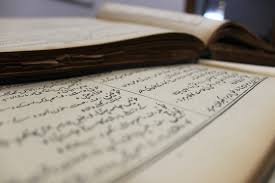
Language is the ultimate tool for connection, cultural integration, and functional diplomacy. For O Level Urdu – Second Language (3248) and A Level Urdu (9686) students, this subject focuses on real-world communication, linguistic adaptability, and professional accuracy. It transforms you from a casual speaker into an articulate communicator who can write, translate, and analyze with speed and precision.
Why Second Language Urdu is Your Practical Advantage
Bilingual Versatility: Open doors to regional corporate markets, media, public relations, and legal sectors across South Asia.
Precision Translation: Master the highly sophisticated, university-level skill of moving between English and Urdu while maintaining tone and nuance.
Structural Mastery: Build an ironclad grasp of functional grammar, idioms, and sentence composition without getting bogged down in dense, archaic literary history.
Strategic Grade Booster: Known for its highly structured mark schemes, meaning targeted practice yields predictable, top-tier results.
The O Level (3248) Strategy: The Dual Papers
The curriculum tests your functional literacy through two highly focused components:
1. Composition and Translation (Paper 1)
Directed Writing: Crafting concise, purposeful pieces (e.g., formal/informal letters, speeches, blogs, or dialogues) using exact bulleted prompts provided by the examiner.
Letter Writing: Maintaining correct formatting while perfectly hitting the required tone, whether addressing a friend or a government official.
English to Urdu Translation: Translating a dense prose passage accurately without relying on clunky, literal word-for-word conversions.
2. Language Usage and Comprehension (Paper 2)
Language Usage: Solving puzzle-like vocabulary tasks, matching idioms (محاورات) to their meanings, and transforming sentence structures.
Summary Writing: Distilling a 500-word passage into a precise 100-word summary, capturing exactly 10 distinct points from the text.
Comprehension Passages: Skimming and scanning unseen articles to answer direct and inferential questions with absolute accuracy.
The A Level (9686) Strategy: Elevating the Scope
Moving to the A Level tier shifts your focus from basic communication to analytical maturity:
Advanced Essay Writing: Writing long-form, persuasive essays on global topics like digital technology, environmental change, health, and contemporary social structures.
Bidirectional Translation Fluency: Translating complex, formal arguments while ensuring native sentence flow and professional vocabulary terms.
Introduction to Texts: Engaging with select classical poetry or accessible modern prose pieces to develop baseline literary interpretation skills.
The SSFH “A” Playbook for Urdu (3248 / 9686)
-
Stick to the Word Count: In Paper 1 and Paper 2 Summary, writing too much is a guaranteed way to lose marks. If the prompt asks for 100 words, give exactly 100 words. Examiners stop reading past the limit, meaning any points you make at the end are completely wasted.
-
Do Not Copy from the Text: When writing summaries or answering comprehension questions, paraphrase. Rephrase the passage using synonyms and alternative sentence structures to prove you possess true linguistic ownership.
-
Deploy “Idiomatic” Translation: If an English text says “it is raining cats and dogs,” translating it literally makes no sense in Urdu. Always look for the native equivalent phrase—in this case, “موسلا دھار بارش” (heavy rainfall).
-
The Directed Bullet Checklist: In your directed writing tasks, tick off the examiner’s prompts as you write. Dedicate a specific, well-structured paragraph to each bullet point. Missing even a single point locks you out of the highest band for content.
Pro Tip for Paper 2 Summaries
Treat the summary task like a data-gathering mission. Read the text once specifically to highlight the facts that match the question. Write those 10 points out as simple, independent sentences first, then link them smoothly using basic conjunctions (تاہم، اس کے علاوہ، کیونکہ) to maximise your language quality score.
Final Words
Urdu Second Language is all about clarity, structure, and functional accuracy. By treating the exam papers like architectural blueprints—where every section has a specific requirement and word budget—you remove the guesswork and pave a clear path to an A*.