

Currently Empty: $ 0
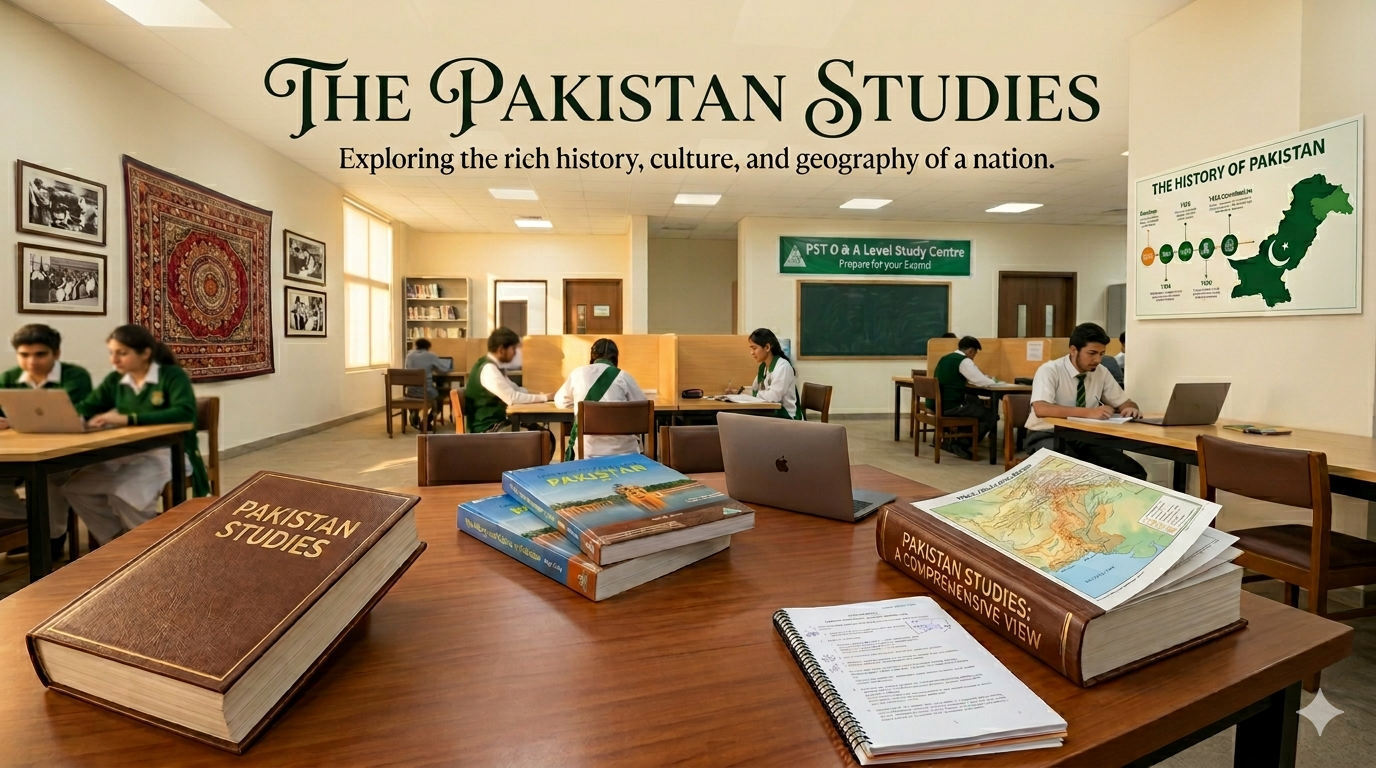
Pakistan Studies is a unique, multidisciplinary subject that combines history, geography, and socio-political analysis. For O Level (Cambridge 2059) and A Level (Cambridge 9489) students, it offers a window into the identity of the nation—tracing its roots from the decline of the Mughal Empire to its modern-day challenges and potential.
Why Study Pakistan Studies?
Understanding Identity: Explores the ideological basis of the Two-Nation Theory and the struggle for independence.
Geopolitical Literacy: Analyses Pakistan’s strategic location and its role in international relations.
Environmental Awareness: Focuses on sustainable development, water management, and the diverse topographies of the region.
Critical Evaluation: Teaches students to analyse primary sources and weigh different historical perspectives.
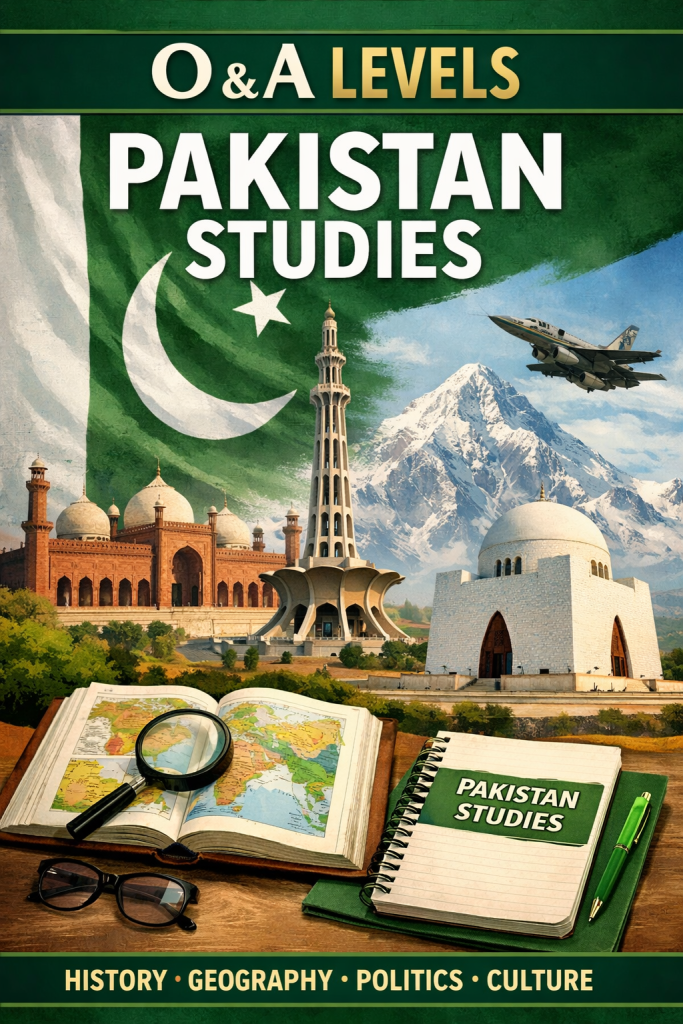
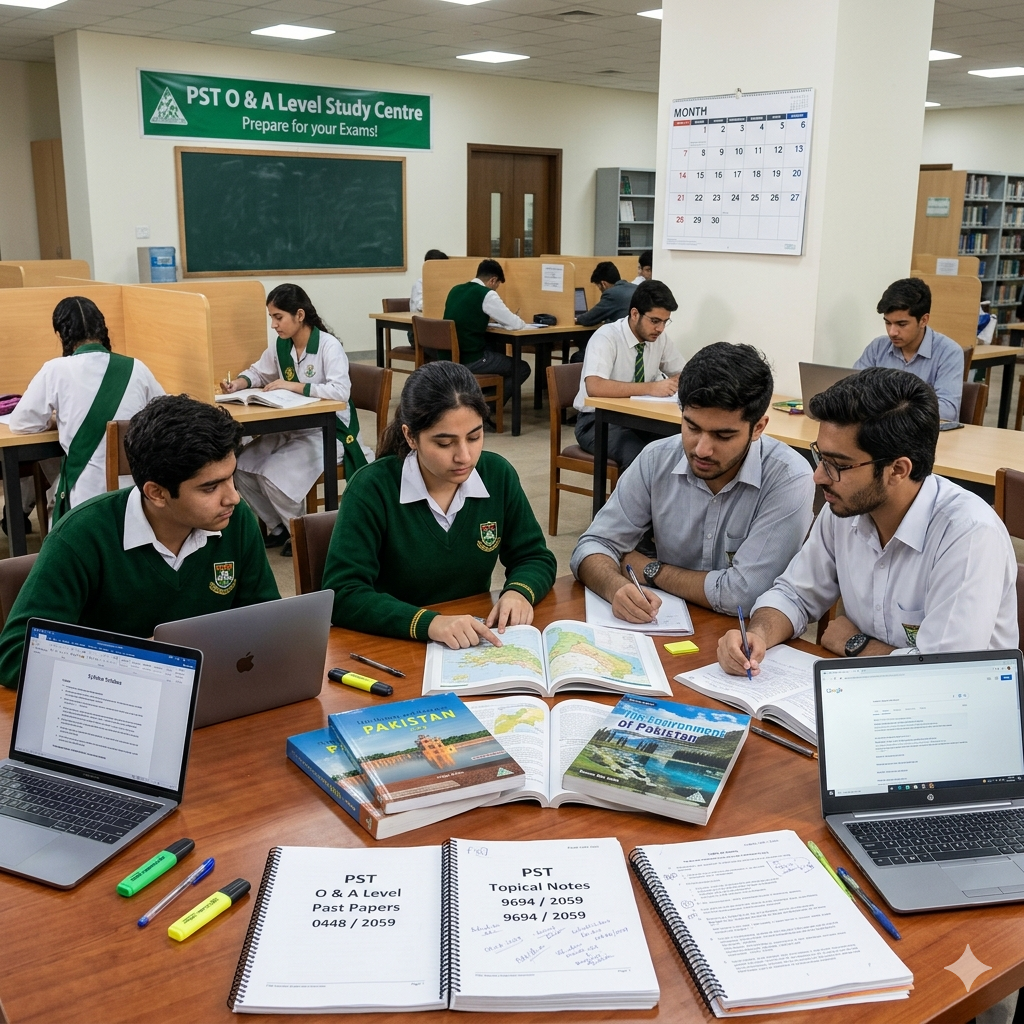
Pakistan Studies O Level (2059) – Syllabus Overview
The O Level syllabus is split into two distinct papers that must be mastered individually:
Paper 1: The History and Culture of Pakistan: Covers the period from 1750 to 1999. Key topics include the War of Independence (1857), the contributions of Sir Syed Ahmed Khan, the Khilafat Movement, and the political leadership of Quaid-e-Azam.
Paper 2: The Environment of Pakistan: Focuses on the geography of the land. You will study natural topography, climate patterns, agriculture, and industrial development. It also addresses modern issues like population growth and environmental conservation.
Pakistan Studies/History A Level (9489) – Syllabus Overview
At the A Level, the subject becomes more specialised, often categorized under “History” with a specific focus on South Asia:
AS Level: Liberalism and Nationalism in Italy and Germany or Modern European History: While focused on global themes, it builds the analytical skills needed to understand state-building.
A2 Level: The History of the USA or International History: Students often choose components that delve into the Cold War or the emergence of new states in the 20th century, providing context for Pakistan’s foreign policy.
Depth Study: Focuses on the transition from colonial rule to independence in South Asia, analysing the complex negotiations between the British, the Muslim League, and the Congress.
Top Resources for O/A Level Pakistan Studies
Source Analysis Practice: For Paper 1 (O Level), practice interpreting cartoons and quotes from the British era—these are high-yield marks.
Atlas and Topographic Maps: For Paper 2, being able to identify the Potwar Plateau or the Indus Delta on a blank map is a non-negotiable skill.
Documentaries: Watching archival footage of the 1947 partition or the 1965/71 conflicts helps turn dry textbook facts into a vivid narrative.
Standard Textbooks: Books by Nigel Kelly (History) and Huma Naz Sethi (Geography) remain the gold standard for exam-aligned content.
Final Words
Pakistan Studies is more than just a requirement; it is a journey through the resilience of a people and the richness of a land. By connecting historical events to the current geographical landscape, you develop a holistic view of the country. Stay curious, analyze the “why” behind the “what,” and you will find that the syllabus naturally falls into place.