

Currently Empty: $ 0

Biology is the study of life in all its complexity and wonder. For O Level (5090) and A Level (9700) students, this subject offers a deep dive into the mechanisms that sustain living organisms—from the microscopic details of a cell to the global impact of ecosystems. Whether you are aspiring to be a doctor, a biotechnologist, or a conservationist, this guide is your roadmap to mastering the biological sciences.
Why Biology is Important for A/O Level Students
- Provides an essential understanding of human health, nutrition, and disease prevention.
- Strengthens analytical skills through the study of complex systems and biological data.
- Introduces the ethical and practical applications of Biotechnology and Genetic Engineering.
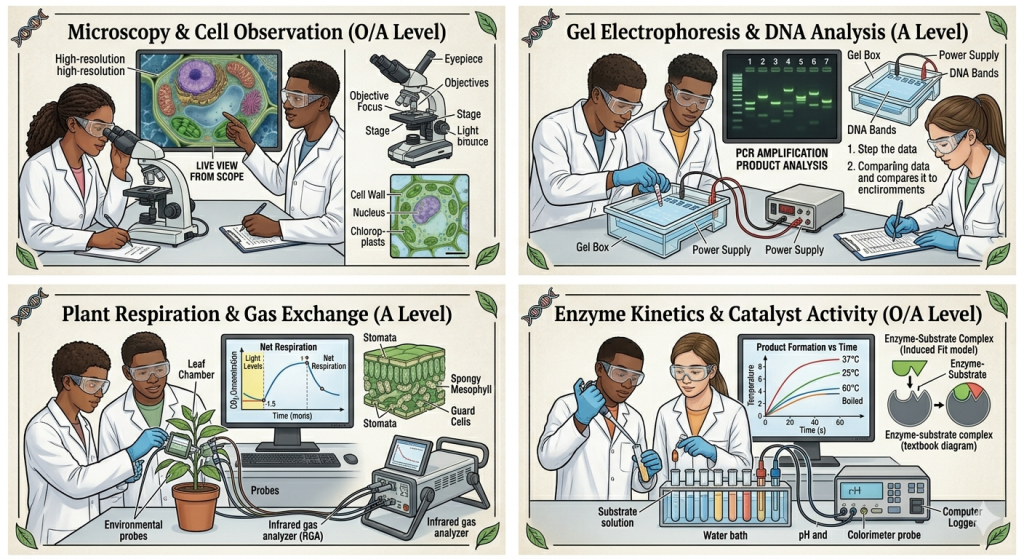
Biology O Level (5090) – Syllabus Overview
The O Level curriculum is built around 6 core lessons that establish a comprehensive scientific foundation:
- Cell Structure, Function, and Biological Molecules: Learning about the microscopic units of life and the chemicals (proteins, carbs, lipids) that power them.
- Human Anatomy, Physiology, and Health: Exploring the organ systems—from the heart and lungs to digestion and the nervous system.
- Genetics, Inheritance, and Evolution: Understanding how traits are passed down through DNA and how species change over time.
- Ecology and Environmental Relationships: Analysing how organisms interact with their environment and the importance of biodiversity.
- Microorganisms in Disease and Biotechnology: Studying bacteria, viruses, and how we use microbes in food production and medicine.
- Experimental and Investigative Skills: Developing the practical techniques required for laboratory work and the Paper 4 (ATP) exam.
Biology A Level (9700) – Syllabus Overview
The A Level syllabus expands these concepts into advanced molecular and systemic detail:
- Cell Biology & Microscopy: Ultra-structure of cells and the complexities of the cell cycle (mitosis and meiosis).
- Energy and Respiration: The biochemical pathways of ATP production and photosynthesis.
- Gene Technology: Advanced study of PCR, gel electrophoresis, and the production of therapeutic proteins.
Top Resources for A/O Level Biology
- Labelled Diagrams: Biology is highly visual. Mastering the ability to draw and label diagrams is essential for scoring full marks.
- Topical Past Papers: Use these to practice your “evaluation” and “description” skills, as examiners look for specific biological keywords.
- Microscopy Practice: Familiarise yourself with calculating magnification and actual size ($Actual Size = Image Size / Magnification$).
- Glossaries: Keep a running list of biological terms to ensure you use precise vocabulary in your answers.
Exam Preparation & Strategy
- Keywords are King: In Biology, vague descriptions lose marks. Use terms like “denature,” “turgid,” “complementary base pairing,” and “active site.”
- Compare and Contrast: When a question asks to “compare,” ensure you mention both similarities and differences to get full credit.
- Graph Interpretation: Practice describing trends in data, using specific values from the graph to support your points.
- The Practical Component: For Paper 4, review common food tests (Benedict’s, Iodine, Biuret) and enzyme experiment setups.
Common Mistakes Students Make
- Confusing Terms: Mixing up “mitosis” and “meiosis,” or “transcription” and “translation.”
- Incorrect Scaling: Drawing biological diagrams that are too small or lack clear, single-line borders.
- Vague Explanations: Saying a plant “dies” instead of explaining that “enzymes denature” or “cells lose turgidity.”
Final Words
Biology is a subject that rewards curiosity and conceptual ownership. By understanding the “why” behind biological processes, you move beyond rote memorisation and start thinking like a scientist. Follow this structured guide, practice your diagrams, and you will be well on your way to an A*.